
Now imagine that same problem across hundreds or thousands of stores, where a failure can go unnoticed between scheduled checks.
Keeping track of temperatures across a network that size is a serious challenge, particularly when you’re relying on individual stores to carry out manual checks and report any problems.
Modern remote temperature monitoring can give retailers regular readings, central oversight and timely alerts when fridges or freezers move outside agreed limits. The real advantage is not simply collecting more data: it’s knowing when and where to act.
In this article, we’ll look at the benefits of temperature monitoring and how Digipal is making the technology more accessible for large retailers.
What is temperature monitoring?
Temperature monitoring involves measuring and recording temperatures within a particular environment, such as a commercial fridge or freezer.
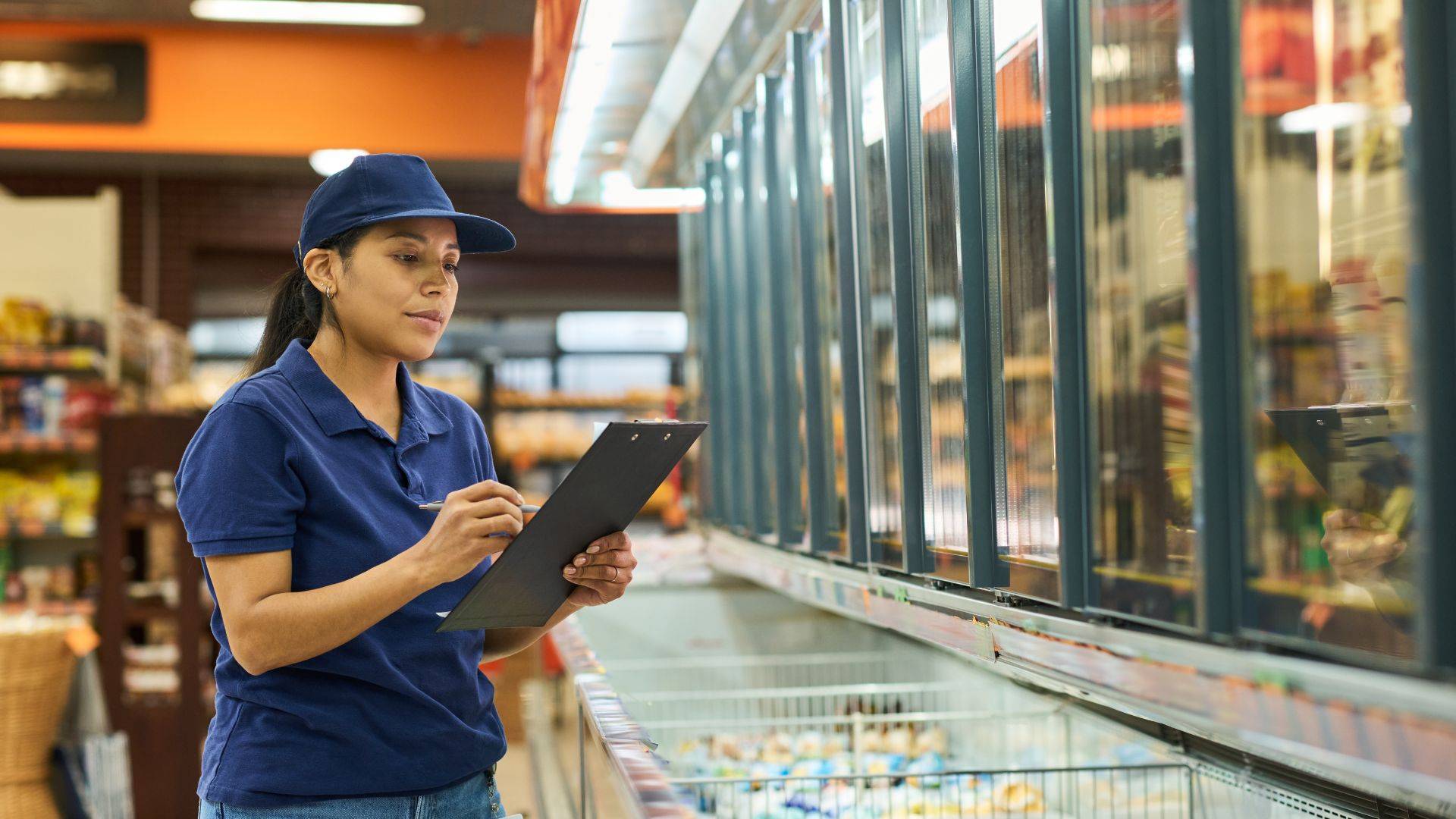
Many food retailers still rely on staff to take regular readings and record them manually. While these checks are useful, they only provide information about the temperature at the time of inspection.
Digital temperature monitoring systems collect readings automatically, providing a more detailed record of how temperatures change throughout the day.
This information can help businesses identify unusual fluctuations, investigate equipment problems and understand how their refrigeration systems are performing over time.
For supermarkets, fast-food chains and other retailers with large estates, that additional visibility can be particularly valuable.
Why is temperature monitoring important?
Businesses that store chilled and frozen food have a responsibility to maintain safe storage conditions.
The Food Standards Agency states that cold food must be kept at 8°C or below in England, Wales and Northern Ireland. It recommends setting fridges at 5°C or below to allow for temperature fluctuations.
If refrigeration equipment isn’t maintaining the correct temperature, food safety can be compromised. Businesses may also face the cost of replacing spoiled stock and repairing faulty equipment.
While a single store manager might have a good understanding of their refrigeration equipment, maintaining that same level of oversight across hundreds of locations is much harder.
Having accurate temperature data available centrally gives businesses a better chance of identifying problems before they become costly.

What are the benefits of temperature monitoring?
1. Better food safety
Commercial fridges and freezers need to maintain appropriate temperatures to protect the products stored inside them.
Digital temperature monitoring provides a consistent record of fridge and freezer air temperatures and can alert the relevant teams when readings remain outside agreed thresholds.
Our sensors measure the air inside fridge and freezer cabinets, as opposed to food core temperature.
2. Spot refrigeration problems earlier
Threshold-based alerts and temperature trends can bring sustained exceptions to the attention of store teams sooner, while giving maintenance teams useful evidence when investigating faults.
And if a particular piece of equipment repeatedly experiences problems, historical readings can help determine what needs attention.
3. Reduce food waste and unnecessary costs
There’s the equipment itself to repair, the staff time involved in dealing with the problem and potentially a significant amount of spoiled food.
For a large retailer, these costs can become substantial when problems occur across multiple locations.
By detecting sustained temperature rises and notifying the right team sooner, businesses may be able to act before stock is lost.
That means less avoidable waste and fewer unexpected costs.
4. Understand what's happening in individual stores
For instance, regular temperature spikes during certain periods might suggest that fridge doors are being opened frequently or left open longer than necessary.
Of course, temperature data alone won’t explain exactly what’s happening. But it gives managers a useful starting point for investigating potential issues.
Over time, this information can help businesses identify patterns and improve day-to-day operating practices.
5. Keep an eye on your entire network
Even if every location is carrying out regular checks, gathering and comparing that information could be a time-consuming job.
Digital temperature monitoring makes it easier to access consistent data across multiple sites.
Central teams can compare refrigeration performance across sites, while store teams receive actionable alerts and can respond to problems where they occur.
How does temperature monitoring work?
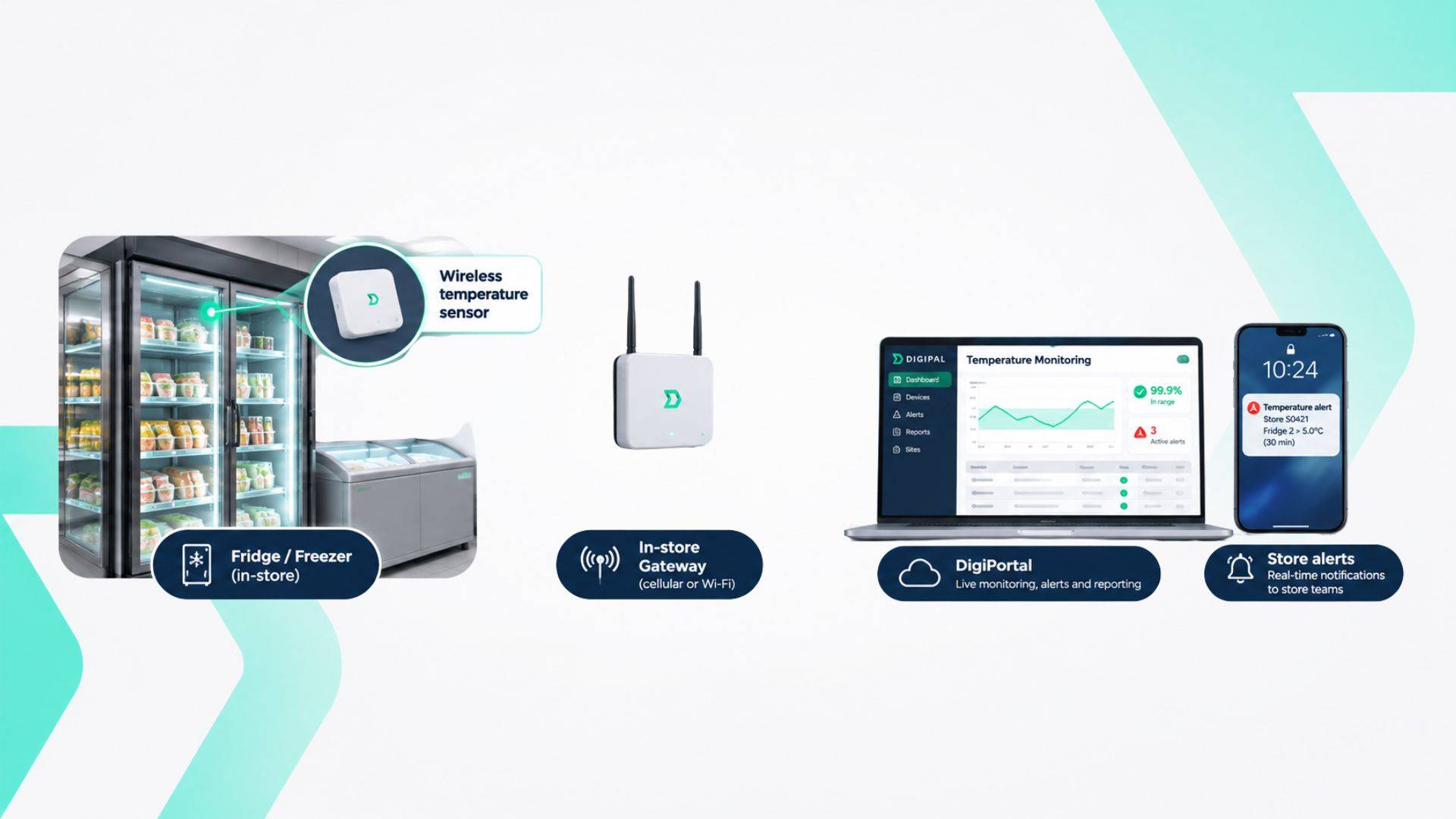
Modern temperature monitoring systems use small wireless sensors or beacons to measure air temperature inside fridges, freezers and other temperature-controlled environments.
In Digipal’s solution, sensors communicate with a local gateway, which sends the data to a cloud platform. Teams can review temperature history, receive alerts and share information through reporting or data feeds.
An important distinction is whether the monitoring works independently of the refrigeration manufacturer’s own controls, providing an additional source of visibility if those controls or their reporting systems are unavailable.
For businesses operating large estates, these practical considerations matter. Installing monitoring equipment across thousands of refrigeration units can become a significant project if every location requires specialist engineers or complicated infrastructure.
Managing temperatures across hundreds of stores
A supermarket or fast-food chain might have several refrigerators and freezers in each location.
Multiply that by hundreds or thousands of stores and you’ve got a considerable amount of equipment to monitor.
This is where the cost and complexity of temperature monitoring can become a barrier.
Businesses need technology that’s straightforward to install, easy to manage and capable of providing useful information across their entire estate.
The less disruption involved in installation, the easier it becomes to introduce temperature monitoring at scale.
Introducing Digipal’s temperature monitoring solution
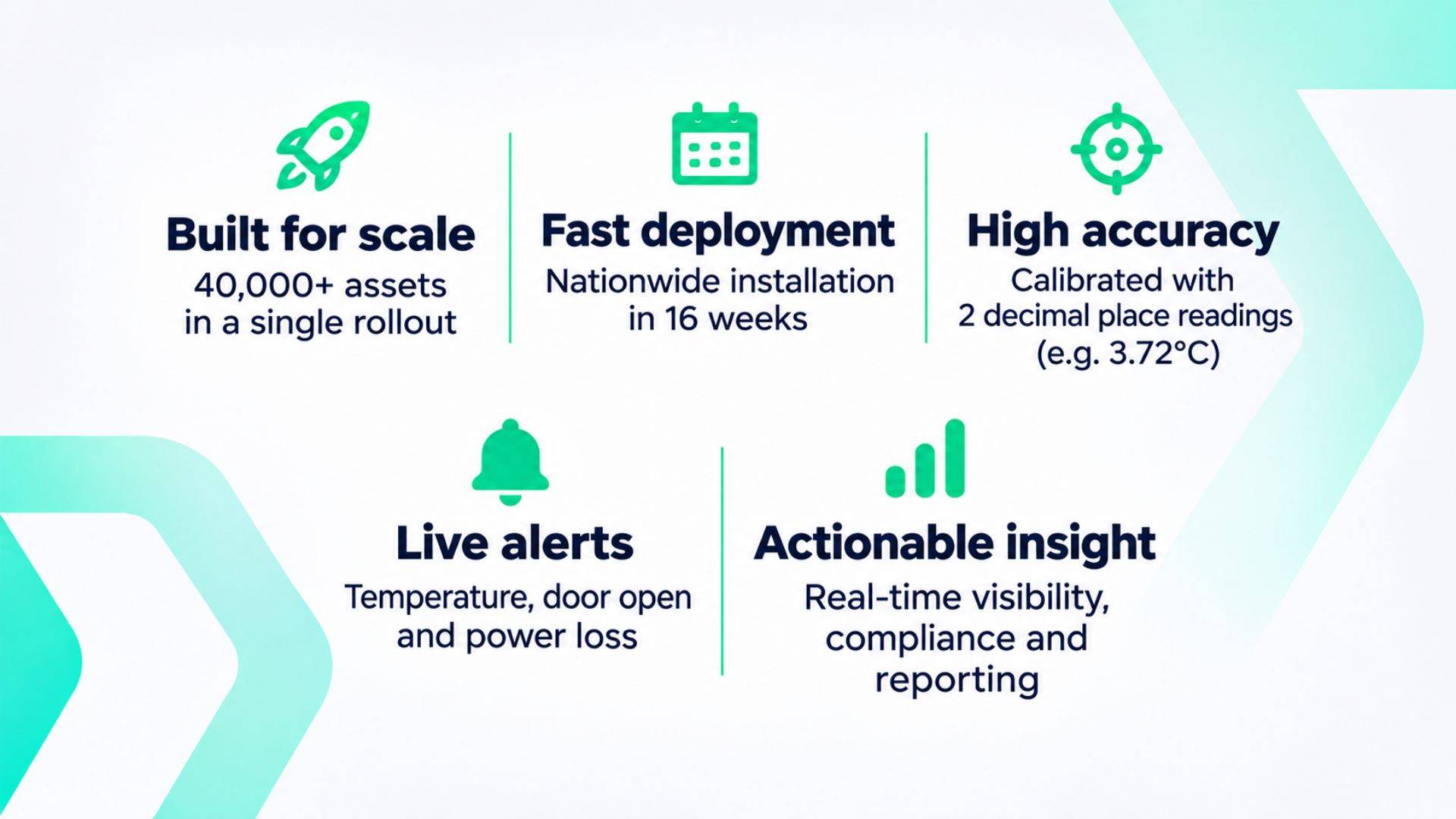
Digipal’s remote temperature monitoring solution is designed for supermarkets, food retailers and hospitality operators managing large estates. It provides an independent layer of monitoring that complements existing refrigeration controls.
Small, discreet wireless beacons monitor the air temperature inside each fridge or freezer. The system can display readings to two decimal places and provide alerts when temperatures move outside agreed limits; display resolution should not be confused with measurement accuracy.
The sensors can be installed quickly without wiring into each refrigeration unit. Depending on the store layout and number of units, installation can take around 30 minutes, without specialist refrigeration engineers.
For a retailer managing hundreds or thousands of locations, a simple installation model can reduce disruption and support faster rollout.
Digipal is supporting a major UK food business with a phased deployment of remote temperature monitoring across a large national estate.
With central reporting, store-level alerts and a monitoring layer independent of individual refrigeration brands, Digipal offers a practical way to improve oversight and reduce the risk of avoidable food waste.

Frequently asked questions
What are the main benefits of temperature monitoring?
Can temperature monitoring reduce refrigeration costs?
Is temperature monitoring suitable for large supermarkets and retail chains?
See Digipal’s remote temperature monitoring in action
If you’re responsible for refrigeration across multiple sites, we can demonstrate how Digipal’s independent monitoring, alerts and reporting work in practice.
Our solution is built for large-scale rollout and can complement the systems and food-safety processes you already have in place.